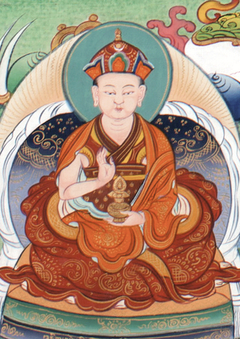
Beautiful Garland of Flowers
༄༅། །རྫོགས་ཆེན་པ་བྱང་ཆུབ་རྡོ་རྗེའི་སྐྱེ་ཕྲེང་གསོལ་འདེབས་ཉུང་བསྡུས་མེ་ཏོག་ཕྲེང་མཛེས་བཞུགས།
Beautiful Garland of Flowers
A Brief Prayer to the Successive Incarnations of Dzogchenpa Changchub Dorje1
by the First Dodrupchen, Jigme Trinlé Özer
ན་མོ་ཤྲཱི་གུ་ར་ཝེ།
namo shri gurawé
Namo śrī-gurave!
བདེ་གཤེགས་སྙིང་པོ་ཀུན་བྱེད་རྒྱལ་པོ་ཡི། །
deshek nyingpo kün jé gyalpo yi
The essence of the sugatas, the all-creating sovereign,
སྲིད་ཞི་ཡོངས་ལ་ཁྱབ་ཕྱིར་རིགས་དྲུག་འགྲོ། །
sizhi yong la khyab chir rik druk dro
Pervades the whole of existence and peace, and therefore
ཀུན་བཟང་ཉིད་ལས་མི་གཞན་དེ་ཡི་ཕྱིར། །
kunzang nyi lé mi zhen dé yi chir
Beings of the six classes are not other than Samantabhadra.
འཁོར་འདས་མཉམ་ཉིད་རྟོགས་པས་ཕྱག་བགྱི་འོ། །
khordé nyamnyi tokpé chak gyi’o
Thus, realizing the equality of saṃsāra and nirvāṇa, I pay homage.
ཨེ་མ།
ema
Ema!
གདོད་ནས་རྣམ་དག་བྱང་ཆུབ་སེམས་ཉིད་དེ། །
döné namdak changchub semnyi dé
Bodhicitta is and always has been utterly pure—
དམྱལ་མེས་མ་ཚིག་པྲེ་ཏས་མ་ཕོངས་ཤིང་། །
nyal mé ma tsik tré té ma pong shing
Unburnt by the fires of hell, undiminished among pretas,
དུད་འགྲོས་མ་འཐོམ་བདུད་སྡེས་མ་ཐུལ་བའི། །
düdrö ma tom dü dé matulwé
Undimmed among animals, unconstrained by demons.
སྟོང་ཉིད་སྙིང་རྗེ་འབྲེལ་དེར་གསོལ་བ་འདེབས། །
tongnyi nyingjé drel der solwa deb
To this union of emptiness and compassion, I pray.
དེ་ལས་མཆེད་པའི་སྒྱུ་མའི་རྣལ་འབྱོར་པ། །
dé lé chepé gyumé naljorpa
Therefrom, you manifested as the illusory yogi
འདས་དུས་བསྐལ་པར་ལུང་བསྟན་རྡོ་རྗེ་དང་། །
dé dü kalpar lungten dorjé dang
Of a bygone aeon, Lungten Dorje,
སྐུ་གསུམ་ཞིང་དུ་མ་ངེས་སྣ་ཚོགས་གཟུགས། །
ku sum zhing duma ngé natsok zuk
And took various forms throughout the three-kāya realms;
གཉིས་ལྡན་འོག་ཏུ་བྲམ་ཟེ་དཔལ་རབ་ལྡན། །
nyiden oktu dramzé pal rabden
You who were the brahmin Pal Rabden during the second age
བོད་རྗེ་སྙན་ཤལ་རྒྱལ་པོར་གསོལ་བ་འདེབས། །
bö jé nyen shal gyalpor solwa deb
And the Tibetan lord, King Tori Nyenshel, to you I pray.
ཁྲི་སྲོང་སྲས་གྱུར་མུ་རུབ་བཙད་པོ་དང་། །
trisong sé gyur mu rub tsepo dang
You who were Murub Tsepo, son of Tri Songdetsen,
ཐུགས་རྗེ་ཆེན་པོའི་རྣལ་འབྱོར་བསམ་གཏན་པ། །
tukjé chenpö naljor samten pa
Yogi of the Great Compassionate One, Samtenpa,
དྭགས་སྟོད་སྔགས་འཆང་རྡོ་རྗེ་རབ་བརྟན་ཞེས། །
dak tö ngakchang dorjé rabten zhé
Mantra-holder of upper Dakpo, Dorje Rabten,
བུདྡྷ་དྭི་བར་བཅས་ལ་གསོལ་བ་འདེབས། །
buddha diwar ché la solwa deb
As well as Buddhadvīpa2—to you I pray.
ཚ་རོང་ཆུ་མཚོར་ནཱ་གའི་སེམས་དཔའ་ཆེ། །
tsa rong chu tsor nagé sempa ché
You who were a great hero of the nāgas in Tsarong’s lake,
ཡུལ་དེའི་དཔོན་བླ་སྙིང་པོ་སྣང་མཛད་དང་། །
yul dé pön la nyingpo nang dzé dang
And the same region’s Pönla Nyingpo Nangdzé,
རྡོ་ཡུལ་སྟོད་དུ་སོ་སྐྱེ་འཕགས་པའི་ཚུལ། །
do yul tö du sokyé pakpé tsul
Who, in the upper Do Valley, appeared as an exalted one,
ཀུན་བཟང་གཞན་ལ་ཕན་དེར་གསོལ་བ་འདེབས། །
kunzang zhen la pen der solwa deb
Kunzang Shenpen—'Ever-Excellent Benefactor'—to you I pray.3
གཞན་ཡང་དཀར་ནག་ལས་ཀྱི་ཚོན་སྣ་ཡིས། །
zhenyang karnak lé kyi tsön na yi
Although individual forms, beyond expression, may appear tainted
སྦགས་པའི་རང་གཟུགས་བརྗོད་པའི་མཐར་འདས་ཀྱང་། །
bakpé rang zuk jöpé tar dé kyang
By the various shades of good and bad actions,
བྱང་སེམས་དངུལ་ཆུ་དམན་དྲིས་མ་གོས་པའི། །
changsem ngulchu men dri magöpé
Bodhicitta, like mercury, remains unsullied by any flaw.
ཕན་བདེའི་རྩ་ལག་དེ་ལ་གསོལ་བ་འདེབས། །
pendé tsalak dé la solwa deb
To this root and branch of benefit and happiness, I pray.
འདི་འོག་ཏིང་འཛིན་རྣམ་གསུམ་རོལ་རྩལ་ལས། །
di ok tingdzin nam sum roltsal lé
Hereafter, through the play of the three samādhis,
སྐུ་གསུམ་སྟོན་པའི་ཕྲིན་ལས་ཕོ་ཉ་བ། །
ku sum tönpé trinlé ponya ba
You will appear as an emissary of the three-kāya teacher,
སྣ་ཚོགས་འཕྲུལ་གྱི་བྱེད་པོ་ཕན་བདེའི་བདག །
natsok trul gyi jepo pendé dak
A forger of diverse miracles and a master of well-being.
ཕུན་ཚོགས་འབྱུང་གནས་དེ་ལ་གསོལ་བ་འདེབས། །
püntsok jungné dé la solwa deb
To this Puntsok Jungné, 'Source of Excellence', I pray.4
དེ་ལྟར་གསོལ་བ་བཏབ་པའི་མཐུ་ནུས་ཀྱིས། །
detar solwa tabpé tu nü kyi
Through the force of praying in this way,
སྐྱེ་བའི་ཕྲེང་བར་བླ་མ་དམ་པ་དང་། །
kyewé trengwar lama dampa dang
May I never be apart from the noble guru throughout successive rebirths.
འབྲལ་མེད་རིམ་དགུའི་ཐེག་པར་ལོངས་སྤྱོད་ནས། །
dralmé rim gü tekpar longchö né
May I savour the nine successive vehicles
ས་བཅུ་ལམ་ལྔའི་དཔལ་ཡོན་མཐར་ཕྱིན་ཤོག །
sa chu lam ngé palyön tarchin shok
And perfect the splendour of the five paths and ten stages.
འདི་ཉིད་ཟེ་ཆེན་གྱི་དབུ་མཛད་འཇིགས་མེད་ཆོས་དར་གྱིས་བསྐུལ་ངོར། ཀུན་བཟང་གཞན་ཕན་གྱིས་བྲིས་པ་ཀུན་ཏུ་དགེ་བར་གྱུར་ཅིག དགེའོ།། །།
In response to a request from Shechen’s chant master (umdzé), Jigme Chödar, this was written by Kunzang Shenpen. May it bring universal virtue! It is excellent!
| Translated by Adam Pearcey, 2022
Source:
rdo grub chen 01 ʼjigs med ʼphrin las ʼod zer. "skye phreng gsol 'debs me tog phreng ba" in gsung ʼbum ʼjigs med phrin las ʼod zer. 10 vols. [Khren tuʼu]: [bla ma bsod dar], 2014. Vol. 9: 381–383
Version: 1.1-20220315
- ↑ Changchub Dorje (byang chub rdo rje) is one of the First Dodrupchen Rinpoche’s several names.
- ↑ i.e., Sangye Lingpa (1340–1396).
- ↑ Kunzang Shenpen (kun bzang gzhan phan) is another of the First Dodrupchen Rinpoche’s several names; it was given to him by the Second Shechen Rabjam, Kunzang Namgyal (1713–1769).
- ↑ This verse is seen as prophesying Jigme Trinlé Özer’s subsequent incarnation, Jigme Puntsok Jungné (1824–1863).